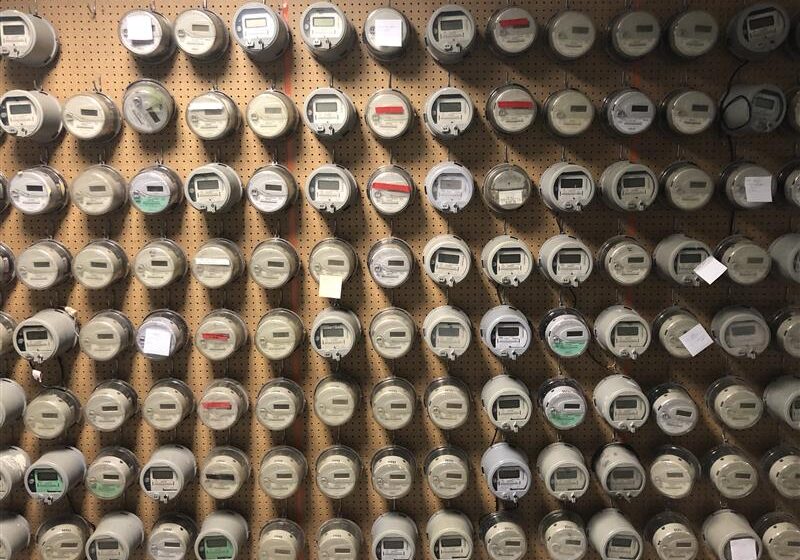
Campus Complexity & Aging Assets: What Do We Fix First, and Why?

Higher education has no shortage of competing funding requests. Whether it’s innovative research due to expanding STEM Programs or fixing a central plant, both are the life source of a state-of-the-art campus. When talking about campus complexity & aging assets, the question our team gets asked the most is, “What should we fix first?”
This question is followed up by more questions, which can be frustrating. This article provides guidance for campus leadership and facilities to consider as high-priority items to fix first. Additionally, this article offers a practical, risk-based way to prioritize repairs and replacements so campus leaders can reduce downtime risk, protect mission-critical spaces, and invest where the return on investment (ROI) is strongest.
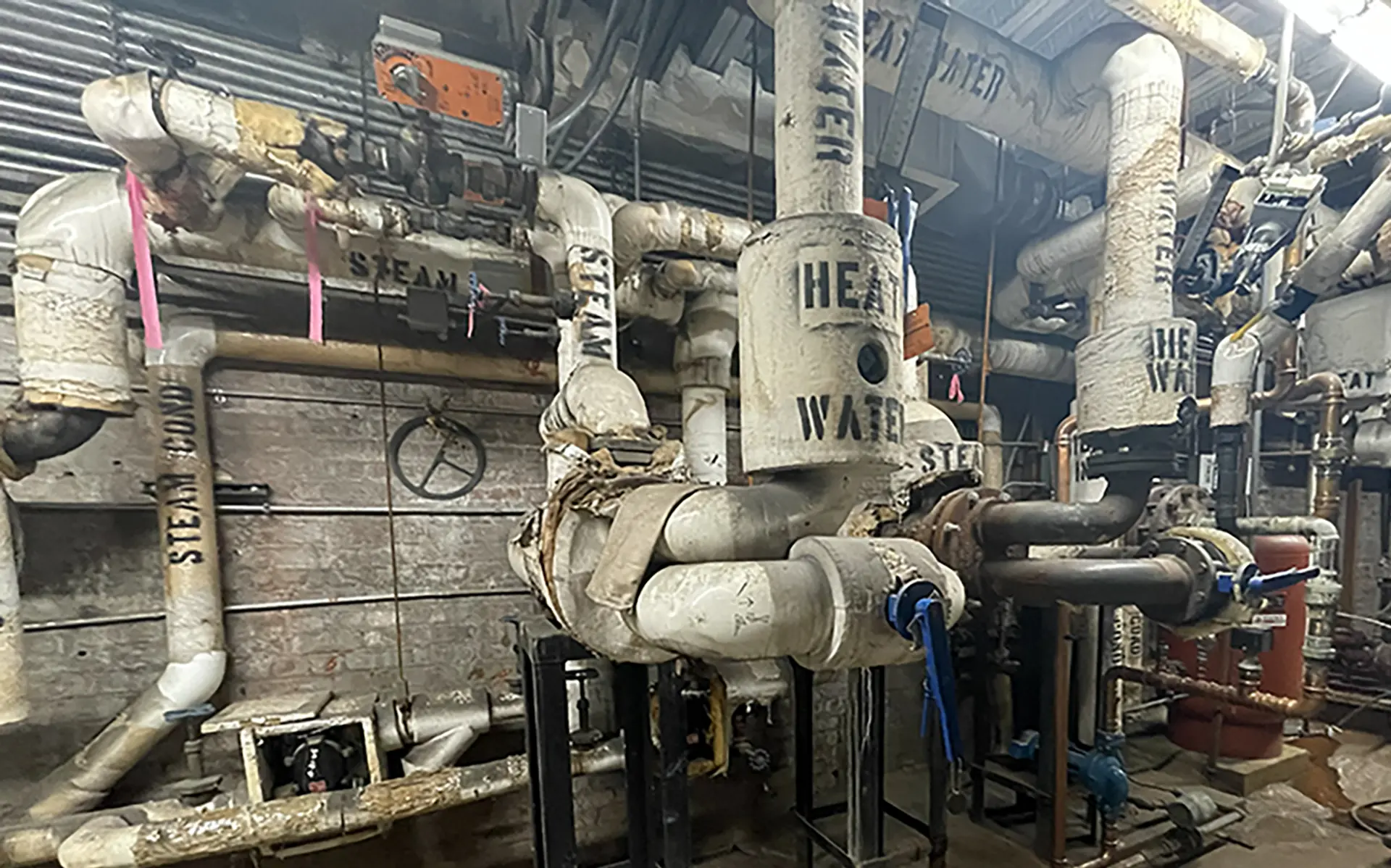
Between deferred backlog, various building-type needs with unique requirements, and equipment nearing its predetermined useful lifespan, creating a clear roadmap that reduces assets at risk has been difficult. Don’t just, “replace what’s old,” have a strategy to replace what’s highest risk and has the best ROI.
Strategies for Implementing the Plan
Getting Everyone on the Same Page
For many campuses, facilities is a tight-knit group that understands the ins and outs of the systems. To have a bigger impact, stakeholders also need to be in the know to be on board. They need to be aware of situations such as: What does it mean if a part fails? Does that mean shutting down a whole building? Higher costs for expedited part orders? Or is there a backup that can come online to subside any issues?
For one campus project for a research building, separate weekly meetings were held to coordinate shutdowns. The timing, who’s impacted, and method of procedure for getting it done were discussed regularly. This had to be done because researchers actively occupied two-thirds of the building while the other third was being renovated. The impact of the project has to be minimal or there would be a significant research impact if affected.
When stakeholders are made aware of things like safety risks, mission criticality, and probability of failure, it is easier to get the group-wide cooperation.
Risk-Based Prioritization to Reduce Decision Paralysis
Develop a straightforward yet usable asset list to be able to sort by building served, age, amount of redundancy, and known issues. Apply a 1-5 score to define the asset’s criticality, threat of failure based on its condition, and ROI for the project’s benefits. ROI benefits often include reduced operation or maintenance expenses.
Sort the results into various buckets. Projects that pose an immediate risk and must be completed very soon, projects that provide high ROIs and quick wins, predictable replacements that require significant planning or capital, and less-critical projects that require monitoring. This will help with reducing decision paralysis where everything feels high priority and high risk, but nothing gets decided. Waiting that extra year could be the difference between benefitting from energy-efficient equipment vs a tipping point of failing equipment.
Implementing the Solutions
Retro-Commissioning (RCx)
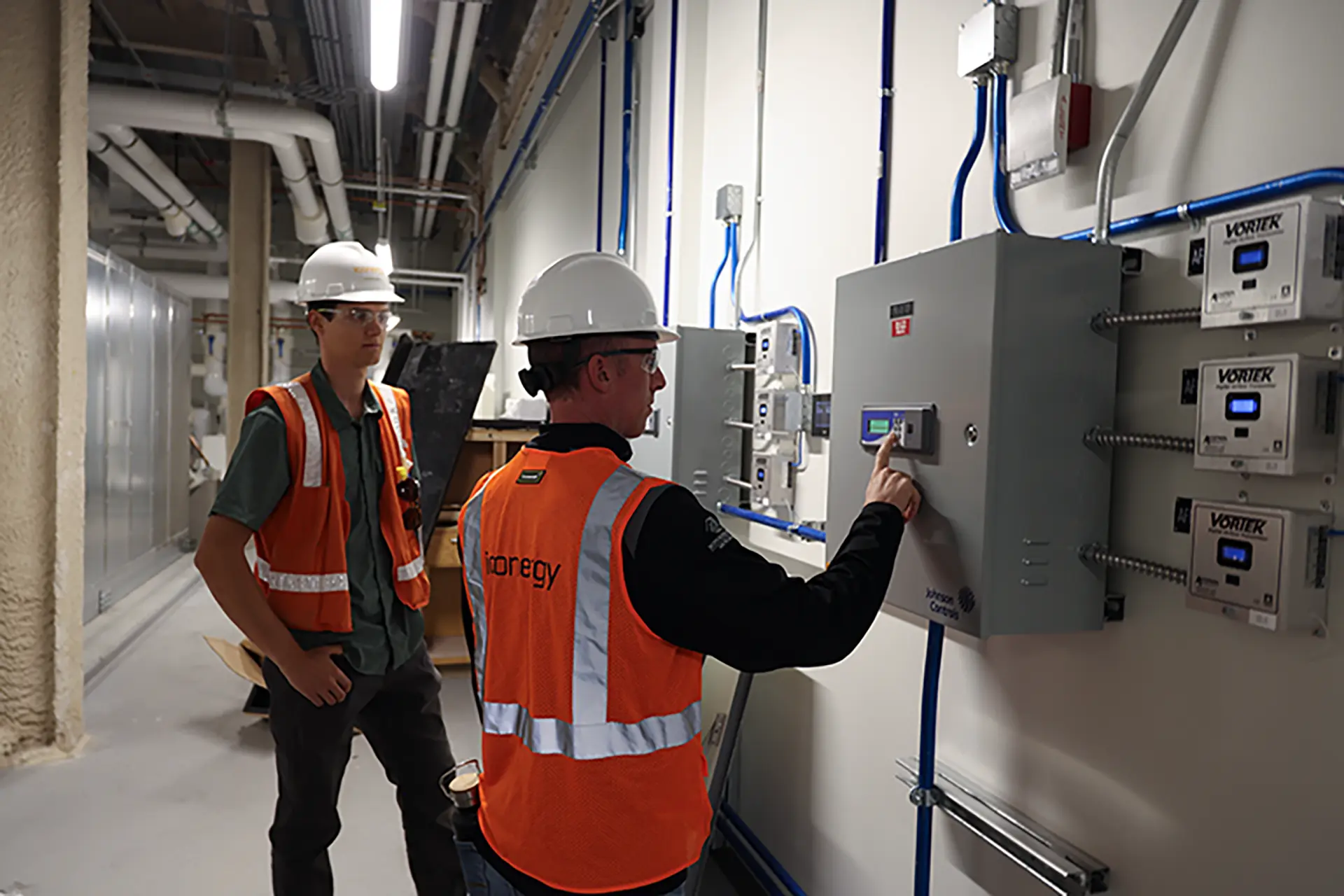
Retro-commissioning is an example project that is a quick-hitter and can provide a high ROI. Building automated systems and controls are the lifeblood of operations. Retro-commissioning will be a detailed review of system operation and effectiveness. The report determines and proposes a variety of repairs and upgrades that can improve comfort, reduce maintenance costs, and improve energy efficiency.
Monitoring-Based Commissioning (MBCx)
Monitoring-based commissioning integrates building systems into one dashboard. This dashboard logs, in real-time 15-minute windows, when equipment turns on, shuts off, and detects potential issues. This strategy brings issues to attention such as incorrect setpoints, simultaneous heating and cooling, and systems that are overworking.
Energy Performance Contracting (EPC)
We commonly hear our clients say they would implement these strategies tomorrow if they had the available budget and staff. And that budget cycles don’t match asset lifecycles. To solve this challenge, we recommend the campus undergo an Energy Performance Contract (EPC). The funding mechanism for this type of project is such that the guaranteed savings pay for the project in its entirety over a predetermined timeline. Projects typically span 5 to 25 years, depending on the magnitude of needs and desires.
The EPC project itself starts with an in-depth ASHRAE Level 3 Audit, also called an Investment Grade Audit. This audit analyses energy use and equipment health to determine energy conservation measures (ECMs) to improve operations.
Deferred maintenance feels like an uphill battle and occupant complaints have a tendency to get attention over high priority issues. An EPC structure is that extra umph you need to knock out that growing list of projects in as little as a few months to a year depending on the scope of services. Your EPC partner becomes an extension of your team. And we bring in the extra hands and experts who will upgrade and update your campus. We leave you with buildings that have less energy waste and streamlined operations.
Frequently Asked Questions
Start with assets that combine high mission criticality, high likelihood of failure, and high consequence of failure (safety, downtime, research impact, or major cost exposure). Then target projects with strong ROI and fast payback.
Age alone doesn’t reflect risk. Two assets can be the same age, but one has redundancy, stable performance, and manageable downtime, while the other is a single point of failure that could shut down a building or research program.
Build a usable asset list that can be sorted by: Building/area served, age and condition, redundancy / backup capability, and known issues and maintenance history. Then apply a simple scoring model.
A practical approach is a 1–5 score for each category:
Criticality (mission impact)
Condition / probability of failure
ROI (energy + maintenance + operational benefits)
Use the total score to sort projects and avoid “everything is urgent” decision paralysis.
An Energy Performance Contract (EPC) can align funding with outcomes by using guaranteed savings to pay for improvements over a set term (often multi-year). It’s a path for tackling a large bundle of upgrades when staffing and capital are constrained.

Author Bio: Pete Salmon is a mechanical engineer with 20 years of experience delivering commissioning services across higher-education, manufacturing, K-12 education, and municipal facilities. At Iconergy, he leads the commissioning services team, bringing extensive field experience on projects ranging from straightforward packaged systems to highly complex systems. He is especially engaged with demanding projects with strict criteria such as BSL-3 laboratories, clean rooms and central plants.
He holds a Master of Science in Civil Engineering, Building Systems Program from the University of Colorado Boulder and a Bachelor of Science in Integrated Science and Technology from James Madison University.
Related Posts

Mark Stetz, PE, PMVE CMVP Energy Savings Performance Contracts (ESPCs or EPCs) improve facility operation and reduce utility…

In a world where the importance of energy efficiency and sustainability has never been more apparent, educating the…